John Boe Cole drinks his whiskey. I sit at the other end of the bar watching. No one drinks whiskey like JB. Least no one I have ever seen. He doesn't sip it. He doesn't swig it. He doesn't throw it against the back of his throat and choke it down. He kind of slurps it, sucking real hard just above the surface to make a fine mist that he inhales. He can clear a double shot in one long breath, making you wonder why he doesn't choke.
I nurse my Pabst and wait. JB is quiet now but that will change.
JB's ankles are bare above his buster brown work boots. It is 95 outside but he wears a flannel shirt over a grey-white longjohn undershirt. The shirtsleeves are rolled back and the elbows are worn through. His nails are dirty. His skin is dark and pockmarked and his high-boned cheeks are hollow. His black hair is greased back with a handful of Southern Rose. Some say he is part Indian, but I've never heard him say so. He turns to look at me. His red-rimmed eyes are blank beneath a sloping forehead; eyebrows bushy enough to sweep floors are separated by a nose that would make Caesar proud. His stare is empty. I return its emptiness. We've seen darkness that would make the devil shiver and have returned. We've both watched hatred, fear and guilt poison everyone that loved us. Now we are strangely content with the vacancy of our lives. If this is as good as it gets it is enough. If it is going to get worse then let it come quickly.
We've sat together in the Diamondback for years. Perhaps we have been here forever. Who knows the time in a place like the Diamondback? This is a dreamland without day or night. The only light is the neon over the bar and the florescents on the jukebox and over the pool table in back. The tiny stage by the exit door is empty, except for Friday's open mike and Saturday night when the Watson boys play. Time mostly passes as shots and drafts. We know it's not Friday or Saturday night but that's about it. Right now for example, the bar clock with the big white hands shows 11:23 but I can't remember if it's light or dark outside. I get my answer when some damn fool suddenly opens the door and daylight bursts in. I clamp my eyes shut and then open them to squint at the invader. It's Nathan, JB's younger brother. JB is tall. Nathan is short. JB is thin. Nathan is broad. His hands are square blocks and twitch at his side.
"JB come on home. Mamma's worried sick.
JB swings around on his stool and leans his elbows back on the bar. He gives Nathan the same gaze he gave me. Even in the Diamondback's twilight I can see Nathan's face darken. Nathan hasn't seen the devil's darkness. To him JB's gaze is a challenge rather than the white flag of surrender. Nathan leans in closer.
"Well? Ain't you gonna say nothing?"
JB sits up a bit and reaches back to get his shot glass. He empties it with a long, loud slurp.
"Dammit JB. What the hell are you thinking?"
I walk back to the jukebox. This is a familiar scene. Time after time Nathan makes the same mistake - trying to talk some sense into JB, getting frustrated and then either shaking JB or trying to drag him out to his truck. Most time JB just goes along without a fuss. Today is not one of those times.

Thursday, April 22, 2010


Friday, April 02, 2010
Post From An Old Blog
This is a post from an older blog of mine.
Tuesday, September 27, 2005
Today
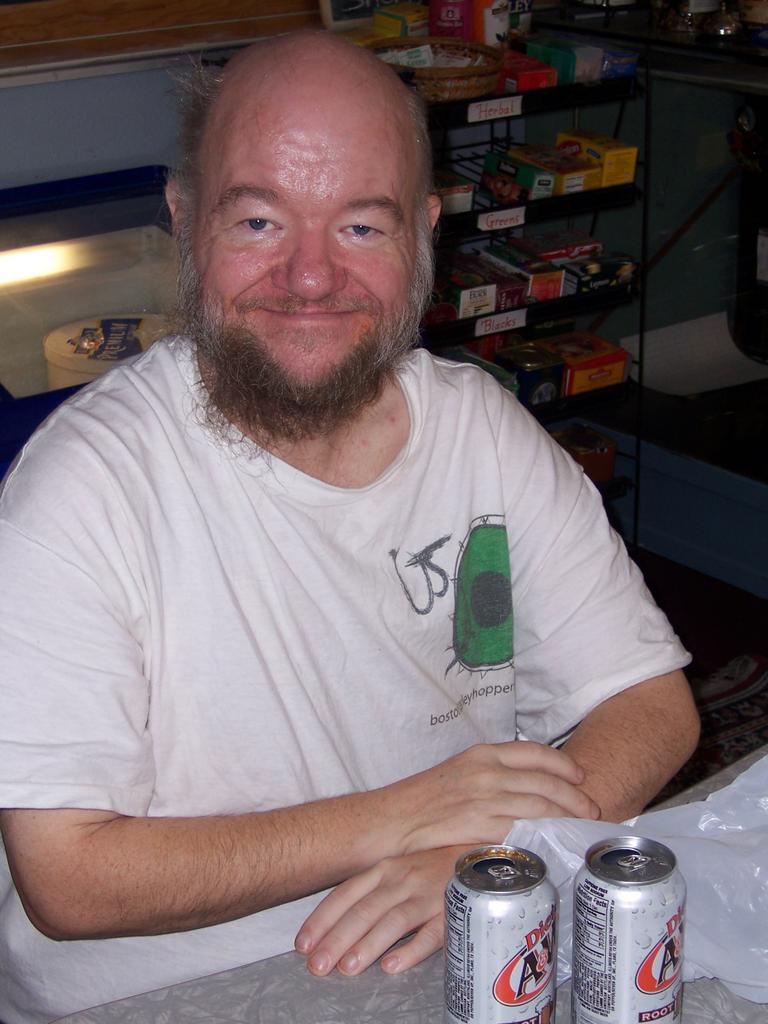 This is Don a friend of mine from Uptown Bill's. Some people say he is handicapped. He does not see it that way. He is simply someone who is trying to become more healthy. That is what Don has taught me today. I would tell you what he taught me yesterday but I think this site may be censored.
 posted by Dale Hankins at 9/27/2005 10:27:00 AM 

Thursday, March 11, 2010
Aunt Sugar's Crows
“I hate crows. They always take the best and leave the rest.”
Aunt Sugar stands at the kitchen sink washing the breakfast dishes and looking out the window as the mob of crows devastates the persimmon orchard. The back of her neck turns red. Soon she will take the shotgun and begin manufacturing crow fertilizer.
A short woman, broad in the shoulders, those who dare might call her stout. They would be fools. At 60 Aunt Sugar still is a deadly threat to anyone who crosses her. Few seldom do. Most people remember when she threw Heath Jackson under the horses, and for those with a memory deficit she is always ready to repeat the tale. I love hearing it.
Aunt Sugar stands at the kitchen sink washing the breakfast dishes and looking out the window as the mob of crows devastates the persimmon orchard. The back of her neck turns red. Soon she will take the shotgun and begin manufacturing crow fertilizer.
A short woman, broad in the shoulders, those who dare might call her stout. They would be fools. At 60 Aunt Sugar still is a deadly threat to anyone who crosses her. Few seldom do. Most people remember when she threw Heath Jackson under the horses, and for those with a memory deficit she is always ready to repeat the tale. I love hearing it.
“Back in those days, in high school, Heath and the fancy ones only knew me as one of those girls, the ones who didn’t look good enough or dress good enough to get asked out on Saturday nights. Sometimes, I wondered why the good Lord gave all looks and money to folks like the Jacksons – silly people who never seemed to appreciate it.” She would straighten her head and fix her eyes on mine. “But I never sat around feeling sorry for myself. No sirree Bob. I always went out on Saturdays anyhow. Me, Sally Jenkins, and Betty Robinson would go on out and have a good time, even if it was just us.”
A master of dramatic pauses, she would smooth her dress, brush back her hair, wipe the table or take some other small distracting action before continuing. “Well this one night we was at a football game. Heath Jackson scored three times. He was a beautiful boy, Heath was – blond hair, smooth skin and eyes that sparkled like diamonds. Maybe I loved him a little. Maybe I did.” On cue, moisture would glisten at the corner of her eye. She would refuse to brush it away, daring it to roll down her cheek. It never did.
“Anyhow, after the game we hung around the exit to catch sight of Heath. I guess he was anxious to leave. I heard him say, ‘Hey Stumpy, why don’t you and the cow girls get out of the way?’”
Her lips would become a thin line. “Then he pushed me and I looked up into his laughing face. Things went white. People say I grabbed him by his shirt and slung him like a sack of flour towards the wagon by the gate. They was gonna be a hayride or somethin’ that night I guess.”
She would reach for my hand and hold it as she neared the climax. “I never meant it to be that way Danny. I didn’t aim for him to land under the horses. I didn’t aim for the horses to spook and run over him. Never in a million years did I mean for it to turn out that away.”
Heath never scored another touchdown. Doctors repaired his broken legs but could not restore his speed and he finally quit the team. The sheriff visited with Aunt Sugar the next day but nothing ever came of it. As for Heath and his family they either were too humiliated or too amazed to accept that tiny Aunt Sugar could bring down a hero like Heath. What judge would possibly believe such a tale? Even those who saw it could not accept that Aunt Sugar had played David to Heath’s Goliath. The paper listed it as a tragic accident. Heath had tripped.
I knew better. I had felt Aunt Sugar’s hands on me more than once as a child. I was grown now, a man visiting my favorite Aunt, but I knew better than to challenge her. When you are Aunt Sugar’s it is best to play by her rules. Outside the window, the crows must have forgotten this truth or perhaps they were ignorant or willfully defiant. No matter. Soon they would pay the ultimate price. Watching them continue to destroy the orchard, Aunt Sugar shook her head, almost dislodging her huge bun of hair.
“Yes damn them. They always take the best part. And that fool Jay just lets it happen.”
Her back is to me as she stands at the sink. Her summer cotton dress reaches to her calves, where solid ankles rise from heavy shoes with square heels: sensible dress for a strong woman; a woman who held her head high as friend after friend left her. Heath’s popularity and the town’s anger over his loss to the football team stripped Aunt Sugar of her friends. Even teachers were wary of her. Her final year of high school was spent in defiant silence.
Scarlet fever took Aunt Sugar’s parents the year after graduation. She kept up the house by working at the Rexall and mending clothes. Her name was Clarissa McKinsey then. There was little sweet or sugar like in her life. She retreated into a routine of work and church until a willowy, shy man named Jay penetrated her shell. Jay Tucker, my Uncle, watched Clarissa McKinsey for years before he dared approach. Like her, he was no friend of the Jackson’s. Like her, he worked hard for what he had. Like her, he had spent endless Saturday nights alone. He lived at the edge of town on a few stony acres whose best feature was a hillside of fruit trees, persimmon trees mostly.
He watched Clarissa carefully, admiring how she marched through the pain of her high school days and her parent’s death. He watched her go to church every Sunday. He thought of asking her to join the group that went to Leon’s for catfish after the sermon but she always disappeared before he could catch her. He asked Pastor Jamieson about it.
The Pastor looked at Jay over the top of his reading glasses. “Now you need to keep this to yourself understand?”
Jay nodded.
“You know old man Hensley and how he has cheated almost everyone in town?”
“Yes.”
“Well he even tried to steal Clarissa’s house from the bank, when she fell behind in her payments. But then he lost his wife last May. And strangest thing, Clarissa came to me and said how she felt like she would start bringin’ him a plate of food every Sunday. Said she didn’t want nobody else to know.”
The Pastor adjusted his glasses. “Like I said, it’s passing strange, but maybe she’s drawn to his meanness. Plenty of folks have called her mean over the years. It don’t matter. I only know Clarissa is doing what no one else will – carrying Christian kindness to someone who most folk hate.”
“Hmm…” was all Jay said, but he watched Clarissa even more closely.
Finally, as if he were a male preying mantis approaching a voracious female, Jay began leaving anonymous notes and gifts on Clarissa’s front steps. This went on for several months: Jay never daring to reveal himself and Clarissa refusing to acknowledge the gifts. Curiosity finally woke Clarissa one dawn and she opened the door as Jay was placing a box of candy on the steps.
Jay jumped as though bitten. “I’m Jay, Jay Tucker, miss.”
Clarissa laughed. “I’m hardly a Miss. You know I’m nearly 30.”
“Being ‘Miss’ ain’t about age I reckon.”
“Is that a fact? Well what is it about?”
Jay cleared his throat and stared up at the roof as if studying it for some sign of disrepair. “Well as I see it, someone is a Miss until they’s married.”
“You don’t say.”
“Yes miss. I do say. And…”
For the first time in nearly a decade, a smile flirted with the corners of Clarissa’s mouth. “And what?"
Uncle Jay did a bit more throat clearing and continued avoiding Clarissa’s eyes. “Well miss. I was wondering if you had ever thought of changing that.”
“Changing what?”
“Changing from being a miss.” Jay’s eyes stopped wandering and found Clarissa’s.
Clarissa stood open mouthed. The air was heavy and difficult to inhale.
Jay smiled. He picked up the box of candy and placed it in Clarissa’s hand.
“Is it alright if I call you Sugar?”
Clarissa heard someone say, “I…I guess so.”
“I’ll be going then. I’ll come by on Saturday and we can go to a movie or somethin’.”
Clarissa remained motionless except for a brief nod.
Jay bowed deeply, turned and skipped down the steps. Whistling he walked away. Clarissa, soon to be my Aunt Sugar, watched as the scarecrow of a man disappeared down the street. Her smile returned. She opened the box of chocolate, ate one and then ate one more. She left the rest. She closed the box and put it into the dowry chest her mother had left her. It was still there when, two months later she and Jay got married. It was a small wedding, just the two of them with the Pastor and his wife. They moved to Jay’s farm.
They never had children. Uncle Jay wanted them, but Aunt Sugar was afraid. Why bring children like her into the world? Why add to the world’s suffering? No, far better to keep things simple. Uncle Jay adjusted. From what I can tell they were happy enough. Their farm always was well kept, even if the poor soil kept it from being among the most productive. Aunt Sugar’s quilts were on walls as far away as New York and their persimmon jam always took first prize at the county fair. Last year a national chain offered to buy the recipe. Uncle Jay often tells me that even without children, their life has been full on this farm; the farm with the persimmon orchard; the persimmon orchard that is full of crows.
The crow’s time has come. Turning to grin at me, Aunt Sugar grabs the shotgun and we head out to the orchard. The mob erupts noisily and flees, but not before Aunt Sugar brings down a dozen or more, her shots ringing out in the clear morning air. Crows flap about on the ground before lying still – midnight corpses among the leaves. I see Uncle Jay at the edge of the orchard. He is like that. Quietly sneaking up on you when you least expect it. Aunt Sugar goes back in to start on lunch. Uncle Jay and I pick up the corpses. Have the best been taken? Are these all that are left? I do not know.
Tuesday, March 09, 2010
Brain Malfunction
Introduction: My brain gave me the following words this morning. I was told the passage is similar to what Yahweh said to Jesus in the Garden of Gethsemane, to what Buddha found under the Bodhi, to what Mohammed heard from Allah after Gabriel led him to the throne of heaven, to what is within Ishvara and Brahman…well you get the picture. Those who know of me, know that I have great reason to mistrust my brain. I am diagnosed as insane, and I do have the papers to prove it. Forgive my ramblings. They give me relief. Do not read them if you fear they will bring you pain.
Speak like a madman. Speak as though your life depends on it. Let the words flow from you; poison gushing from the infected wounds of your sorrows. Release your thoughts as a scream that moves beyond self, becoming the elemental cry of life, the yell of an infant claiming defiant entrance into the world. As a child, you did not ask for life. Life was thrust upon you. Let the world listen as you claim life by embracing your rage and fear of the gift. In this way you will truly heal. Only in this way will you help those who are searching.
Calm, reasoned discussion will not allow you to find your fears, to know them, to move through them. The false tranquility of your life must be ruffled in order to reflect your new face. Untested peace is empty of comfort. Ecstasy requires its agony.
Your song will not be of pain alone. As you befriend your fears they will disappear. You will find voice for joy, releasing the light within, sharing it with those around you. Your suffering will be nothing but a moment’s illusion as you are swept up in the boundless energy of life without end. You will see the stars, behold the wonder of their making, and be freed from the desire for significance. Others may try to steal your wonder by naming it – teacher they will say, or father, or even the bringer of their salvation. Do not listen to them. Theirs is the voice of the serpent at the tree telling the lie of separation between you and me. We have never been separate. We have always been together, without need for measures – none higher or lower, none greater or smaller.
The phantom mind that holds you tightly now will at last pass away. Your true self will finally see me clearly and fear no more. Dancing on the very pinpoint of time, space and thought we will journey ever further into the wonderful mysteries of life. All that man has been on your tiny world will be yours; all those who painted, sang and twirled, all those who fought and who resisted fighting, and all those who dared to learn from the stars, letting go of superstition and fear. All that you call nature will open and embrace you, welcoming you to the breath of life eternal. That which was you will fully join that which is us.
Rest easy my son. Your trials are momentary. Your path is eternal. Creature of an instant, ancient of days, you tread where there is no space, no time, no depth, breadth or height – the place where there is only love.
Speak like a madman. Speak as though your life depends on it. Let the words flow from you; poison gushing from the infected wounds of your sorrows. Release your thoughts as a scream that moves beyond self, becoming the elemental cry of life, the yell of an infant claiming defiant entrance into the world. As a child, you did not ask for life. Life was thrust upon you. Let the world listen as you claim life by embracing your rage and fear of the gift. In this way you will truly heal. Only in this way will you help those who are searching.
Calm, reasoned discussion will not allow you to find your fears, to know them, to move through them. The false tranquility of your life must be ruffled in order to reflect your new face. Untested peace is empty of comfort. Ecstasy requires its agony.
Your song will not be of pain alone. As you befriend your fears they will disappear. You will find voice for joy, releasing the light within, sharing it with those around you. Your suffering will be nothing but a moment’s illusion as you are swept up in the boundless energy of life without end. You will see the stars, behold the wonder of their making, and be freed from the desire for significance. Others may try to steal your wonder by naming it – teacher they will say, or father, or even the bringer of their salvation. Do not listen to them. Theirs is the voice of the serpent at the tree telling the lie of separation between you and me. We have never been separate. We have always been together, without need for measures – none higher or lower, none greater or smaller.
The phantom mind that holds you tightly now will at last pass away. Your true self will finally see me clearly and fear no more. Dancing on the very pinpoint of time, space and thought we will journey ever further into the wonderful mysteries of life. All that man has been on your tiny world will be yours; all those who painted, sang and twirled, all those who fought and who resisted fighting, and all those who dared to learn from the stars, letting go of superstition and fear. All that you call nature will open and embrace you, welcoming you to the breath of life eternal. That which was you will fully join that which is us.
Rest easy my son. Your trials are momentary. Your path is eternal. Creature of an instant, ancient of days, you tread where there is no space, no time, no depth, breadth or height – the place where there is only love.
Thursday, February 11, 2010
Write To Exist
Some days writing is the only way I know that I really exist. The curtain between the real and the imagined sometimes becomes so frayed that it is transparent. Writing restores the warp and woof of the weave; reconstituting the barrier that “this” is the side where society and the real people live, while “that” is the side where things appear and disappear of their own volition – an Alice in Wonderland of the mind where “reality” becomes “curioser and curioser”.
Today is one of those days. I am in a good mood, but the Itty Bitty Shitty Committee is filibustering my brain; telling me that I have done nothing today to deserve feeling good, that in fact my past (and likely my future) contains many things for which I should feel eternally guilty. Fuck the committee. I shall feel good today – even if the committee claims it is undeserved and temporary. I shall trust that my happiness lies on “this” side of the curtain and that the committee lives on “that” side. Here and now there is ample cause for happiness – I need do nothing to earn it. The sun shines in the window of the Bluebird Restaurant, a welcome sight after weeks of gray Iowa sky. Silver rimmed tabletops, chairs with blue plastic seats and silver legs, a blue and white checkered floor, windows large enough to let in the entire sky - energize my fingers to write these words, these very ones, to let me know that my happiness is real. The committee has no argument for this experience. There is none – only acceptance and joy.
Today is one of those days. I am in a good mood, but the Itty Bitty Shitty Committee is filibustering my brain; telling me that I have done nothing today to deserve feeling good, that in fact my past (and likely my future) contains many things for which I should feel eternally guilty. Fuck the committee. I shall feel good today – even if the committee claims it is undeserved and temporary. I shall trust that my happiness lies on “this” side of the curtain and that the committee lives on “that” side. Here and now there is ample cause for happiness – I need do nothing to earn it. The sun shines in the window of the Bluebird Restaurant, a welcome sight after weeks of gray Iowa sky. Silver rimmed tabletops, chairs with blue plastic seats and silver legs, a blue and white checkered floor, windows large enough to let in the entire sky - energize my fingers to write these words, these very ones, to let me know that my happiness is real. The committee has no argument for this experience. There is none – only acceptance and joy.
Monday, January 25, 2010
Grady's Dumplings - READER BEWARE!
WARNING!!! This nasty little story is not for children or the general publc. It was written as therapy. DO NOT READ if you are easily offended by by profanity, deviant sexuality or sociopathic themes.
I shot Daddy before I ate the cat. Me and Daddy was in the kitchen. The bulb hanging from the cord in the ceiling swung back and forth shining light and then dark on Daddy’s face. I shot him three times. First slug almost missed him - just nicked his chin. But it was a 10 gauge so teeth and tongue sprayed all over the wall next to the icebox.
He turned back with a big hole in his neck and black button eyes. Next shot took the off the top of his head. Brains, blood and skull flew all over Mamma’s curtains - the ones she bought last spring before the cancer took her. Me and Cindy always begged her to stop smoking, but she wouldn’t listen. Now there was a bloody mess all over the very thing she worked so hard to save up for. Daddy fell over and began flopping around – making a real mess. I clicked open the barrel and dropped in another shell. I held him down with the gun barrel while I put the last slug in his chest. Maybe it hit his heart. Maybe not. But he stopped flopping.
I wiped down the kitchen, drug Daddy outside and wrapped him in the old tarp we used to cover the tractor with in winter. Then I grabbed Grandma Drewy’s rolling pin and went looking for Grady, Daddy’s big fat calico. If Grady had clawed Cindy once he had clawed her a thousand times. Daddy just laughed when it happened. Them days was over now.
I found Grady crouched down behind the washtub next to the garage. He didn’t cry nor nothing when I picked him up. He just hung there - a big fat cushion; legs hanging out like sticks. I carried him over to the porch. His ears went back and he made a little mew just before I whacked him with the rolling pin. I cried some then, but not so much anybody would notice. I sat on the back porch and skinned him while I watched the sun come up. Cindy always said there wasn’t nothing prettier on God’s green earth than the sun in the morning. Sometimes she would stare at it so long I worried it would blind her.
I skinned and gutted Grady then cut him up like a squirrel – hindquarters, front legs, neck and ribs. I stacked the meat in a dishpan and rinsed it off with the garden hose. I put the head, skin and guts in a pail out by the garage for Mrs. Ashcroft’s dogs. I looked out towards the garden. Dew was on the turnips so I picked a few.
I put Grady in the big old Wearever pot, filled it with water and turned up the heat. Then I mixed up some dumplings just like Mamma taught me. When I had a little ball of dough, I floured the cutting board and washed Grady’s blood off the rolling pin. I rolled out the dough and cut long strips one way and short ones the other, making little squares. I left the dumplings to dry and turned down the heat on Grady real low. Grady was tough, but an hour or two in the pot would soften him up just fine.
I put the greens in the Dutch oven and turned up the heat. I cut up an onion and threw in a piece of salt pork. It wasn’t till then that I caught myself. What was I thinking? Was I crazy? Two of Mamma’s main rules was to save salt pork for times when all you had to eat was beans and to never, never, ever use her Dutch oven for greens. Too late now, salt pork was in the greens, they were in the Dutch oven, and Grady was in the Wearever – a real mess. Good thing Mamma wasn’t here to see it.
I went back outside and drug Daddy out to the Dogwood at the back of the lot. I dug as far down as I could manage and then rolled him in. I covered him up and spread mulch all around. I figured the Dogwood was a good place for Daddy. He always loved it. He wasn’t a smiley kind of man but he’d smile when the Dogwood bloomed. He’d sit on the back porch smoking a Pall Mall and stare at the flowers. I’d sit watching. Waiting. Finally, after ever so long, it would come - the tiniest little wrinkle at each corner of his mouth. Then he’d look down at me and his face would turn back to stone. That was my signal. I’d run and get the whiskey and he’d pour a little in his coffee. After a while, he would smile again. This time his store bought teeth would shine and his eyes would crinkle. I’d give my eyeteeth for that crinkle. Sometimes, he’d reach out and run his hand over my head.
“You sure are a looker Danny…yes sir, a real looker.”
Mamma would call us in to breakfast. She made the best biscuits you ever tasted, Mamma did. They were just like television. Steam really did come out when you busted’em open. The insides were all soft and fluffy, perfect for sopping up eggs, red-eye gravy and cane syrup. Daddy always pulled the insides out and left them on the side of his plate. He only ever ate the crust. I loved watching his strong fingers crumble it up and drop it in the juice from his eggs.
After breakfast, Daddy would go on out to the shed. Me, Mamma and Cindy would go to the garden. Weeds always sprouted up overnight. We had to keep at’em if we wanted to eat. We lived mostly on the garden along with the deer, rabbits and squirrel that Daddy and me killed. Sometimes Mamma would get us a piece of pork or beef from Safeway, but most of the time we did just fine with what we could raise or catch. We never went hungry. They was always beans and cornbread.
Most days Daddy would spend a little time in his shed before coming out and going on down to the domino hall. He never came back before dark. Sometimes he didn’t come back til morning - sometimes not for two or three days. Those were the bad times. Mamma would start in as soon as Daddy opened the door.
“Eustus Tucker – you son-of-a-bitch. Where the hell have you been? You expect me to just sit here like a bump on a log? You think you can just leave me here while you go off gallivantin’ around?” The longer Mamma shouted the louder she got. “You got a woman in town or what? You think I’m just your slave or somethin’?”
Daddy would sit and just stare at the tabletop, swigging whiskey like it was water. After a drink or two, he’d raise his fist and slam the table so hard the whiskey bottle would jump. In a voice dark as midnight he’d growl, “You better hush woman.”
Mamma never did though. She’d just keep on and on while Daddy’s face got redder and redder. Finally, he’d slap her and she’d throw something at him. Me and Cindy would run and hide under my bed, hugging each other as the thud of his fists carried down the hallway. Mamma would keep shouting for a bit, but soon there wouldn’t be nothing but more thumping and then the crying. If the crying went on too long, we’d hear Daddy take off his belt. The sound of it whistling through the air to slap against her skin was so hurtful I’d look down to see if my skin wasn’t busted open. Me and Cindy would hug tighter and whisper prayers to the baby Jesus. Cindy’s looked she was staring straight into hell. Not sad. Not afraid. Not anything. After a thousand years, Daddy would pull Mamma down the hall to their bedroom. Sometimes when I peeped around my bedroom door I saw him dragging her by her hair.
"No Eustus…please no! I’m sorry honey. Please no Eustus!”
For a spell, banging and crying would come from their room and then only silence, like a night with no moon in it. Cindy would sneak on down to her room. I’d climb into my bed and lie there waiting. I never waited long. I’d smell whiskey before the whisper came.
“You awake?”
I never said nothing. Didn’t need to. I knew what to do. I turned over on my stomach and pulled down the covers.
“That’s right. That’s right sugar. You know what Daddy needs. You’re the only one that does. The only one that really loves me.”
He’d pull down my underpants and rub my butt. The calluses on his hands scratched and made my skin tingle. I’d go someplace else right about then, like the time me and Cindy found that big ol’ piece of quartz down by Miller’s pond. I could see it sparkle in the sun so clear, bright and beautiful that I hardly felt it when Daddy shoved into me. Sometimes he used lotion to make it easy but sometimes all he had was spit. It never took long, kinda’ like the way I saw horses doing it over at Sadie Jenkins – in and out a few of times, lickedy split and that would be all she wrote. I was used to it. I knew he needed it and besides, if he didn’t get it he might kill Mamma or Cindy. Truth be told, sometimes I rubbed my pecker and squirted while he did it. I never told nobody but Cindy ‘bout that. She just giggled.
That was pretty much our days and nights. Time is as time was, like they say. Things changed last spring though. Mamma had always prayed for our deliverance, but it didn’t seem like Jesus knew our address. But he found Mamma last spring when her cancer delivered her into his arms. Least I hope so. Me and Cindy was left with Daddy, but we knew Mamma would help Jesus find us just as soon as she could.
After Mamma passed, Daddy came at me every night. But he kept away from Cindy - least ’til last night. Last night I wasn’t enough. Last night, when he was done with me, he went after Cindy. I snuck behind him when he went down to her room. I peaked inside and watched him yank her up from the bed. She screamed.
He was too drunk to notice and too mean to care. He pushed her to her knees and shoved his pecker in her face. She shook her head and turned away. He held the back of her head with one hand and pinched her nose closed until she opened her mouth to breathe. He pushed his pecker in and just held it there. I must have yelled or something cause he jumped back and Cindy fell over – choking, her face blue, bruises already showing from where he had mashed her face. I looked up and saw Daddy’s face – empty, some spit coming from one corner of his mouth. I felt his fist and saw white. I tasted blood and fell into darkness.
When I woke, I was tied to my bed. Daddy stood in the door to my room. Light from the hall shined around him, throwing his shadow across my bed.
A voice I had never heard screamed. “Untie me you son of bitch! Let me up from here, or I’ll kill you! I swear to God I will!”
Daddy growled from the dark. “You ain’t strong enough to kill a piss ant. You ain’t nothin’ but your Mamma’s little ol’ baby girl. Weak as water that’s you. All you ever will be.”
It was too dark to see his eyes, but I felt them burning in the dark. He turned and shuffled on down the hallway. I tried to get loose, but had tied me up good. I pulled and tugged all night. Finally, just at daylight, I got loose.
I crept real careful down to Cindy’s room and poked my head inside. “Cindy?”
She didn’t say nothing. I moved to the side of her bed and touched her. She was stone cold. I kissed her closed eyes and raised the covers. She was all bloody between her legs and there was a big pool of blood next to her. I wanted to cry, but a deep hole inside me sucked up all my tears. I lay down in the blood and stared up at the ceiling, like me and Cindy did sometimes. We’d pretend the stains on the ceiling were butterfly wings, fairytale people or maybe maps of some far away place – a place where me and her would run off to someday. I dreamed of running off and I promised myself I would, but right now I had things to do.
I eased out of bed and snuck down the hall to the gun case. I was careful to not step on the board that needed a nail. Daddy always promised Mamma he would fix it, but he never did. I’d be damned if I would let that nail stop me now. When I reached the case, I opened the glass door and looked at Daddy’s guns; a .22 for rabbits and squirrel; a .30-06 Springfield for deer, and a 14 guage for duck. And there at the top was the 10 gauge that Grandaddy Tucker had got from his daddy who got it from his daddy on back to a time before anybody could remember. It was Daddy’s favorite. I remembered how he would show it to me, over and over when he was drinking.
It was my favorite too. Early morning sunlight shined on the barrel from the kitchen doorway down at the other end hall. The barrel glowed with a blue light, like it was shining through water and wasn’t quite ready to be real. Dark patterns lined the steel from where it had been folded and beaten back on itself maybe a thousand times. I snapped open the barrel and dropped in two slugs. Slugs don’t have the coverage of shot but they’re better if you want to knock something down right quick. I put two more in my pocket. I cocked the hammers and put the stock tight against my shoulder - just like Daddy taught me last fall when I shot the button buck down by Silver Creek. If you don’t hold a big gun tight it can hurt you. The Damascus had broken the arms of Tuckers before, I wondered if it had ever killed one.
I walked to the kitchen. Daddy was over by the corner cabinet pouring another whiskey. I stepped across the doorway. Daddy heard and turned around. A breeze ruffled the curtains and swung the bulb hanging from the cord in the ceiling. Light and dark chased each other across Daddy’s face. His eyes were bloody, like he hadn’t slept at all. Maybe he had got into Mamma’s old pills. Happy pills Mamma called’em. Sometimes she got so happy she would crawl around the yard in her nightgown talking to the grass. Daddy looked like he sure could use a happy pill right about now.
He smiled like nothing was wrong but he sat the whisky bottle down real slow. He never took his eyes off me.
“What you doing?”
“I’m gonna’ kill you.”
He snorted. “Is that right? What makes you think you can kill me?”
“Cindy,” was all I could say.
Daddy closed his eyes. “I never, I never meant to do that son. It was the drink. You know how crazy it makes me.”
The gun felt heavy. Daddy opened his eyes and watched the barrel weave. He grinned at me and that was enough. I let loose. Like I said, the first shot took off his jaw. I would never have to listen to him lie again. The second shot took away the top of his head. He would never think up ways to hurt Cindy or me again. The last shot took away his heart. I would never have to feel it beat against my back in the night. Not ever, ever again.
After I took care of Grady and Daddy, I sat at the kitchen table and took a deep breath of the dumplings and greens. Mamma used to bring me “cassie” here when I was little. Cassie was my pretend coffee - mostly cream and sugar with just enough coffee to turn it brown. Me and Mamma would sit and talk real quiet, so as not to wake Cindy and Daddy. It was our special time; the time when she would tell me about when she was a little girl over in Roeher putting peanuts in her RC Cola, and how she grew up to be a big tall woman who played basketball like nobody’s business. I loved the smell of her cigarettes and how she flicked the ashes into the big green ashtray in the middle of the table. She never missed. There were never any ashes on the table – nary a one. Now the ashtray was empty and Mamma’s smell was so faint I could hardly tell she had ever been here. I didn’t have no cigarettes so I got up and made cassie. I switched to real coffee last year cause Daddy said it would put hair on my chest. But my chest was still bare and wasn’t nobody around so I guessed a little cassie wouldn’t hurt. Yessir, Cassie would do just fine.
Grady's Dumplings
I shot Daddy before I ate the cat. Me and Daddy was in the kitchen. The bulb hanging from the cord in the ceiling swung back and forth shining light and then dark on Daddy’s face. I shot him three times. First slug almost missed him - just nicked his chin. But it was a 10 gauge so teeth and tongue sprayed all over the wall next to the icebox.
He turned back with a big hole in his neck and black button eyes. Next shot took the off the top of his head. Brains, blood and skull flew all over Mamma’s curtains - the ones she bought last spring before the cancer took her. Me and Cindy always begged her to stop smoking, but she wouldn’t listen. Now there was a bloody mess all over the very thing she worked so hard to save up for. Daddy fell over and began flopping around – making a real mess. I clicked open the barrel and dropped in another shell. I held him down with the gun barrel while I put the last slug in his chest. Maybe it hit his heart. Maybe not. But he stopped flopping.
I wiped down the kitchen, drug Daddy outside and wrapped him in the old tarp we used to cover the tractor with in winter. Then I grabbed Grandma Drewy’s rolling pin and went looking for Grady, Daddy’s big fat calico. If Grady had clawed Cindy once he had clawed her a thousand times. Daddy just laughed when it happened. Them days was over now.
I found Grady crouched down behind the washtub next to the garage. He didn’t cry nor nothing when I picked him up. He just hung there - a big fat cushion; legs hanging out like sticks. I carried him over to the porch. His ears went back and he made a little mew just before I whacked him with the rolling pin. I cried some then, but not so much anybody would notice. I sat on the back porch and skinned him while I watched the sun come up. Cindy always said there wasn’t nothing prettier on God’s green earth than the sun in the morning. Sometimes she would stare at it so long I worried it would blind her.
I skinned and gutted Grady then cut him up like a squirrel – hindquarters, front legs, neck and ribs. I stacked the meat in a dishpan and rinsed it off with the garden hose. I put the head, skin and guts in a pail out by the garage for Mrs. Ashcroft’s dogs. I looked out towards the garden. Dew was on the turnips so I picked a few.
I put Grady in the big old Wearever pot, filled it with water and turned up the heat. Then I mixed up some dumplings just like Mamma taught me. When I had a little ball of dough, I floured the cutting board and washed Grady’s blood off the rolling pin. I rolled out the dough and cut long strips one way and short ones the other, making little squares. I left the dumplings to dry and turned down the heat on Grady real low. Grady was tough, but an hour or two in the pot would soften him up just fine.
I put the greens in the Dutch oven and turned up the heat. I cut up an onion and threw in a piece of salt pork. It wasn’t till then that I caught myself. What was I thinking? Was I crazy? Two of Mamma’s main rules was to save salt pork for times when all you had to eat was beans and to never, never, ever use her Dutch oven for greens. Too late now, salt pork was in the greens, they were in the Dutch oven, and Grady was in the Wearever – a real mess. Good thing Mamma wasn’t here to see it.
I went back outside and drug Daddy out to the Dogwood at the back of the lot. I dug as far down as I could manage and then rolled him in. I covered him up and spread mulch all around. I figured the Dogwood was a good place for Daddy. He always loved it. He wasn’t a smiley kind of man but he’d smile when the Dogwood bloomed. He’d sit on the back porch smoking a Pall Mall and stare at the flowers. I’d sit watching. Waiting. Finally, after ever so long, it would come - the tiniest little wrinkle at each corner of his mouth. Then he’d look down at me and his face would turn back to stone. That was my signal. I’d run and get the whiskey and he’d pour a little in his coffee. After a while, he would smile again. This time his store bought teeth would shine and his eyes would crinkle. I’d give my eyeteeth for that crinkle. Sometimes, he’d reach out and run his hand over my head.
“You sure are a looker Danny…yes sir, a real looker.”
Mamma would call us in to breakfast. She made the best biscuits you ever tasted, Mamma did. They were just like television. Steam really did come out when you busted’em open. The insides were all soft and fluffy, perfect for sopping up eggs, red-eye gravy and cane syrup. Daddy always pulled the insides out and left them on the side of his plate. He only ever ate the crust. I loved watching his strong fingers crumble it up and drop it in the juice from his eggs.
After breakfast, Daddy would go on out to the shed. Me, Mamma and Cindy would go to the garden. Weeds always sprouted up overnight. We had to keep at’em if we wanted to eat. We lived mostly on the garden along with the deer, rabbits and squirrel that Daddy and me killed. Sometimes Mamma would get us a piece of pork or beef from Safeway, but most of the time we did just fine with what we could raise or catch. We never went hungry. They was always beans and cornbread.
Most days Daddy would spend a little time in his shed before coming out and going on down to the domino hall. He never came back before dark. Sometimes he didn’t come back til morning - sometimes not for two or three days. Those were the bad times. Mamma would start in as soon as Daddy opened the door.
“Eustus Tucker – you son-of-a-bitch. Where the hell have you been? You expect me to just sit here like a bump on a log? You think you can just leave me here while you go off gallivantin’ around?” The longer Mamma shouted the louder she got. “You got a woman in town or what? You think I’m just your slave or somethin’?”
Daddy would sit and just stare at the tabletop, swigging whiskey like it was water. After a drink or two, he’d raise his fist and slam the table so hard the whiskey bottle would jump. In a voice dark as midnight he’d growl, “You better hush woman.”
Mamma never did though. She’d just keep on and on while Daddy’s face got redder and redder. Finally, he’d slap her and she’d throw something at him. Me and Cindy would run and hide under my bed, hugging each other as the thud of his fists carried down the hallway. Mamma would keep shouting for a bit, but soon there wouldn’t be nothing but more thumping and then the crying. If the crying went on too long, we’d hear Daddy take off his belt. The sound of it whistling through the air to slap against her skin was so hurtful I’d look down to see if my skin wasn’t busted open. Me and Cindy would hug tighter and whisper prayers to the baby Jesus. Cindy’s looked she was staring straight into hell. Not sad. Not afraid. Not anything. After a thousand years, Daddy would pull Mamma down the hall to their bedroom. Sometimes when I peeped around my bedroom door I saw him dragging her by her hair.
"No Eustus…please no! I’m sorry honey. Please no Eustus!”
For a spell, banging and crying would come from their room and then only silence, like a night with no moon in it. Cindy would sneak on down to her room. I’d climb into my bed and lie there waiting. I never waited long. I’d smell whiskey before the whisper came.
“You awake?”
I never said nothing. Didn’t need to. I knew what to do. I turned over on my stomach and pulled down the covers.
“That’s right. That’s right sugar. You know what Daddy needs. You’re the only one that does. The only one that really loves me.”
He’d pull down my underpants and rub my butt. The calluses on his hands scratched and made my skin tingle. I’d go someplace else right about then, like the time me and Cindy found that big ol’ piece of quartz down by Miller’s pond. I could see it sparkle in the sun so clear, bright and beautiful that I hardly felt it when Daddy shoved into me. Sometimes he used lotion to make it easy but sometimes all he had was spit. It never took long, kinda’ like the way I saw horses doing it over at Sadie Jenkins – in and out a few of times, lickedy split and that would be all she wrote. I was used to it. I knew he needed it and besides, if he didn’t get it he might kill Mamma or Cindy. Truth be told, sometimes I rubbed my pecker and squirted while he did it. I never told nobody but Cindy ‘bout that. She just giggled.
That was pretty much our days and nights. Time is as time was, like they say. Things changed last spring though. Mamma had always prayed for our deliverance, but it didn’t seem like Jesus knew our address. But he found Mamma last spring when her cancer delivered her into his arms. Least I hope so. Me and Cindy was left with Daddy, but we knew Mamma would help Jesus find us just as soon as she could.
After Mamma passed, Daddy came at me every night. But he kept away from Cindy - least ’til last night. Last night I wasn’t enough. Last night, when he was done with me, he went after Cindy. I snuck behind him when he went down to her room. I peaked inside and watched him yank her up from the bed. She screamed.
He was too drunk to notice and too mean to care. He pushed her to her knees and shoved his pecker in her face. She shook her head and turned away. He held the back of her head with one hand and pinched her nose closed until she opened her mouth to breathe. He pushed his pecker in and just held it there. I must have yelled or something cause he jumped back and Cindy fell over – choking, her face blue, bruises already showing from where he had mashed her face. I looked up and saw Daddy’s face – empty, some spit coming from one corner of his mouth. I felt his fist and saw white. I tasted blood and fell into darkness.
When I woke, I was tied to my bed. Daddy stood in the door to my room. Light from the hall shined around him, throwing his shadow across my bed.
A voice I had never heard screamed. “Untie me you son of bitch! Let me up from here, or I’ll kill you! I swear to God I will!”
Daddy growled from the dark. “You ain’t strong enough to kill a piss ant. You ain’t nothin’ but your Mamma’s little ol’ baby girl. Weak as water that’s you. All you ever will be.”
It was too dark to see his eyes, but I felt them burning in the dark. He turned and shuffled on down the hallway. I tried to get loose, but had tied me up good. I pulled and tugged all night. Finally, just at daylight, I got loose.
I crept real careful down to Cindy’s room and poked my head inside. “Cindy?”
She didn’t say nothing. I moved to the side of her bed and touched her. She was stone cold. I kissed her closed eyes and raised the covers. She was all bloody between her legs and there was a big pool of blood next to her. I wanted to cry, but a deep hole inside me sucked up all my tears. I lay down in the blood and stared up at the ceiling, like me and Cindy did sometimes. We’d pretend the stains on the ceiling were butterfly wings, fairytale people or maybe maps of some far away place – a place where me and her would run off to someday. I dreamed of running off and I promised myself I would, but right now I had things to do.
I eased out of bed and snuck down the hall to the gun case. I was careful to not step on the board that needed a nail. Daddy always promised Mamma he would fix it, but he never did. I’d be damned if I would let that nail stop me now. When I reached the case, I opened the glass door and looked at Daddy’s guns; a .22 for rabbits and squirrel; a .30-06 Springfield for deer, and a 14 guage for duck. And there at the top was the 10 gauge that Grandaddy Tucker had got from his daddy who got it from his daddy on back to a time before anybody could remember. It was Daddy’s favorite. I remembered how he would show it to me, over and over when he was drinking.
It was my favorite too. Early morning sunlight shined on the barrel from the kitchen doorway down at the other end hall. The barrel glowed with a blue light, like it was shining through water and wasn’t quite ready to be real. Dark patterns lined the steel from where it had been folded and beaten back on itself maybe a thousand times. I snapped open the barrel and dropped in two slugs. Slugs don’t have the coverage of shot but they’re better if you want to knock something down right quick. I put two more in my pocket. I cocked the hammers and put the stock tight against my shoulder - just like Daddy taught me last fall when I shot the button buck down by Silver Creek. If you don’t hold a big gun tight it can hurt you. The Damascus had broken the arms of Tuckers before, I wondered if it had ever killed one.
I walked to the kitchen. Daddy was over by the corner cabinet pouring another whiskey. I stepped across the doorway. Daddy heard and turned around. A breeze ruffled the curtains and swung the bulb hanging from the cord in the ceiling. Light and dark chased each other across Daddy’s face. His eyes were bloody, like he hadn’t slept at all. Maybe he had got into Mamma’s old pills. Happy pills Mamma called’em. Sometimes she got so happy she would crawl around the yard in her nightgown talking to the grass. Daddy looked like he sure could use a happy pill right about now.
He smiled like nothing was wrong but he sat the whisky bottle down real slow. He never took his eyes off me.
“What you doing?”
“I’m gonna’ kill you.”
He snorted. “Is that right? What makes you think you can kill me?”
“Cindy,” was all I could say.
Daddy closed his eyes. “I never, I never meant to do that son. It was the drink. You know how crazy it makes me.”
The gun felt heavy. Daddy opened his eyes and watched the barrel weave. He grinned at me and that was enough. I let loose. Like I said, the first shot took off his jaw. I would never have to listen to him lie again. The second shot took away the top of his head. He would never think up ways to hurt Cindy or me again. The last shot took away his heart. I would never have to feel it beat against my back in the night. Not ever, ever again.
After I took care of Grady and Daddy, I sat at the kitchen table and took a deep breath of the dumplings and greens. Mamma used to bring me “cassie” here when I was little. Cassie was my pretend coffee - mostly cream and sugar with just enough coffee to turn it brown. Me and Mamma would sit and talk real quiet, so as not to wake Cindy and Daddy. It was our special time; the time when she would tell me about when she was a little girl over in Roeher putting peanuts in her RC Cola, and how she grew up to be a big tall woman who played basketball like nobody’s business. I loved the smell of her cigarettes and how she flicked the ashes into the big green ashtray in the middle of the table. She never missed. There were never any ashes on the table – nary a one. Now the ashtray was empty and Mamma’s smell was so faint I could hardly tell she had ever been here. I didn’t have no cigarettes so I got up and made cassie. I switched to real coffee last year cause Daddy said it would put hair on my chest. But my chest was still bare and wasn’t nobody around so I guessed a little cassie wouldn’t hurt. Yessir, Cassie would do just fine.
Friday, December 25, 2009
Christmas
Christmas. Two thousand years of celebrating the birth of Jesus Christ. I find myself depressed. Our celebrations seem so far from what Jesus reportedly said. The basic message of “love one another” has mutated into love of money and power for so long that it is trite to bring it up. I hear very little about love these days. Mostly I hear hate those who are different, or who don’t agree with me. If you dare to suggest that we should love even those who hate us (which I believe was one of Jesus’s main themes) you are called a fool, told that you totally misunderstand the Bible, and that you are in fact a subversive who is a threat to our society.
I am not pure in this. I do my share of hating. I do my share of lying, cheating and stealing to get “ahead”. I drink coffee that costs enough to support a sub-Saharan family for more than a week. I benefit from success in the world of business – a success that gives me the leisure to sit on my ass and critique the world and its problems.
My coffee shop opened a bit later this morning and I did a bit of window-shopping at the store next door. Inside there was a rack of CD’s. I laughed out loud at some of them. The titles reminded me of my days in business conference rooms.
Selling the Invisible – As a former business consultant, I am very familiar with those skills.
What Got You Here, Won’t Get You There – Hopefully, the author has a means of helping you ensure that there is a place worth getting to.
GO Put Your Strengths to Work – I wonder if the author sees kindness with no thought of reward as a strength?
100 Ways To Motivate Yourself – Does reaching out to others count as a valid motivation?
The Healthy Brain – Does the purpose for which I use my brain influence its health as much as diet and exercise?
Never Be Lied To – In my case, trying not to lie, or lying a little bit less, is a big enough challenge.
The Fine Art of Small Talk – Personally, I think I talk too much, and most of my talking is very small indeed.
Secrets of the Millionaire Mind – I wonder if the millionaire mind and the healthy brain are compatible? Does Barney Madoff have a healthy brain? How healthy is Warren Buffet’s brain? What about the brains of Wall Street and the multinational banks?
5 Steps To Successful Living – Wow! This guy has found a way to outdo the twelve steps of recovery programs, the ten commandments of the Judeo-Christians, and the eight-fold path of Gautama.
7 Habits of Highly Effective People – If I only want to be moderately successful can I settle for less than seven?
Unleash the Giant Within – What shall the giant do when it is unleashed? I think the world has enough industrial, financial, religious, and military giants – don’t you?
Okay, okay dear reader. I am ranting once again. I judge and thus am judged by my own judgments and am “hoisted on my own petard”. It is easy enough to criticize the efforts of others. Where is my book on how to live the good life and achieve success? Short answer. There isn’t one. I doubt if there ever will be such a book, or even if there ever should be.
My “success”, or lack of it, is a purely personal affair. If I ever did find a secret to happiness and success I would gladly give it away. Or at least I truly believe I would try. But I know that things change. I know that I am weak and might readily take the place of the authors of the above texts given half a chance. Like them, I probably would continue to want more and more. Like them, I would convince myself that my success was a sign of my having found the one true answer or a mark of supernatural providence’s favor. Like them, I would want to share my “secrets” in order to change the world, and of course, build a nice little trust fund for my progeny along the way. Like them, I probably would simply be human, unable to escape the pride and arrogance inbred into this simple little ape body I inhabit. And yes, like them, some days I might wake up and at least try to do an act of kindness without thought of the consequences or in expectation of reward.
But enough of this empty chatter. These thoughts only weaken my ability to feel in touch with what I hope is the true spirit of the season.
The sun will be shining soon. It will warm my skin, while I relax far from the blizzard-ridden plains of Iowa. I will enjoy this coffee in the name of all those who cannot. I will go to my daughter’s house and make mashed potatoes. I will laugh (or pretend to) when my grandchildren open their presents. I will hug my wife. Somewhere during this flurry of activity I will remember that the only answer to my suffering I know is to try and be a little kinder than I actually feel like being.
I am not a believer in Jesus; at least as a supernatural being laden with the lessons delivered from pulpits. Perhaps he existed. Perhaps he did not. But I can celebrate the message of trying to act with loving kindness. That requires no particular belief or feeling. It only requires action. One can attempt to be kind even if one is a non-believer , is depressed, and often has great difficulty feeling loving and kind. I have witnesses who have told me this is true. Today I will accept their judgment.
Merry Christmas to all. I mean that in the very best way possible. I truly do.
Monday, December 07, 2009
You Who Laugh
You lie in the arms of the man who makes you laugh. You weep with joy from the most electrifying climax you have ever known. Dean runs his hand along your hip to find the little dimple between your thigh and butt – the place you have shown him – the place that always drives you mad. You shiver. His touch borders on pain; almost as if you’ve been skinned and his hand is rubbing raw flesh. You sob out loud. He turns to you and kisses away the tears from your cheek.
“What is it? Are you sad?”
You shake your head and press your face into the curve of his neck. What is it about his smell? You were doomed the first time you caught his scent. Doomed to wonder how it would feel to have his hand at your breast, how he would feel between your legs, how it would feel to have him inside you, possessing you and being possessed by you. No one in Jeff City, Missouri had ever smelled that way. No one. But you would not fully know your doom until he laughed. God! What wonderful light comes from his eyes. What joy booms in his voice. All creation is healed when Dean Bradley laughs.
He continues his caresses. He truly is worried. You know he is frightened of women’s tears. He’s told you how his mother and Laura his first lover used tears as weapons; teaching him that tears meant he should be sorry, never letting him know that sometimes tears are just the acid of anger or the sweat of passion. The bitches. If you could get your hands on them you would claw them raw and dredge them in salt. How could they not have seen the beauty of the child within the man? How could they not have cherished his innocence?
You press your breasts against him and hold him tighter, raising your lips to nibble at his ear.
“Don’t worry baby. It’s just because I’m so happy.”
He sighs and you turn on your side to spoon. You wriggle your butt to find that special spot. Spring’s breeze comes in the window carrying the serenade of crickets and Ligustrum’s heavy perfume. His hand finds your breast; you clasp it to you and shed a few more tears. You close your eyes.
Tires crunching gravel wake you. Could that be? Please God no! Surely the idiot wouldn’t keep hounding you after being warned by the Sheriff? No one could be that stupid. But there it is. The sound of the diesel Mercedes is unmistakable and you can hear something by Patsy on the radio. You can’t quite make it out, but you know it must be one of the sad ones, maybe Walkin’ After Midnight? Layton always listens to sad songs by Patsy and Loretta when he’s been drinking. You can imagine him sitting there around the corner from the house, the car window open and radio blaring, piss-ass drunk. The bastard turns up the radio, blasting “…searching for you!” across the neighborhood. Dean stirs.
“Wha…what is it? What the hell?!”
Your belly tightens. “Nothing baby. Just some drunk I guess…”
“You know better than that. It’s Layton. When will he realize it’s over? Should we call the cops?”
“No. Not yet. Maybe he’ll go away on his own.”
Thankfully Layton remembers the restraining order and drives on. Dean moves to spoon once more and soon you hear the light rattle of his snore.
You stare wide-eyed into the dark. What will you do?
Dean makes you laugh and is the best lover you have ever known. He is an up and coming manager in his firm but old debts mean it will be years before he is financially stable. And you worry about his drinking – he drinks every night saying, “Work hard, play hard!”, as he rattles the ice in his glass of Drambuie. But you know you will always carry his scent with you, will always compare any future lovemaking to the joy you feel with him. But is it just the joy of sex that keeps you coming back? No. You know that it is the laugh and the kindness that warms his eyes that draws you back every time you try to leave him.
Layton is the CFO of Dean’s firm and is stupefyingly rich; airplane, three houses, maids - if it can be bought he owns it – sometimes you wonder if he doesn’t just look at you as another purchase. He is comfortable to be with and very kind, but people mistake you for his daughter when you are out with him. When people find out that you are a couple out on a date, their eyes widen and their mouths twist into that little sneer you hate. But you don’t blame them really. You feel a little like sneering at yourself. Is it really only power, money and comfort that you find with Layton? Is there anything else? You remember the night he fell asleep crying in your arms. You held him close, brushing his hair, feeling needed and warm.
For months now you have been torn between the two - first Dean, then Layton, Dean, Layton, Dean, Layton; on and on in a cycle that is tearing you and them apart. You keep hoping that one of them will make a choice and leave you, but every time you leave one the other begins a campaign of sad letters, gifts, flowers and with Layton, even stalking. You feel like meat being torn between two dogs. You must end it. But how to choose?
You hear Adam’s wheezing from his room. The doctor’s have said he will need lifelong care. Layton certainly can make sure that happens. He has even offered to set up a trust fund for college. But Adam cringes whenever Layton touches him. He laughs at the voices and faces Dean makes when he reads the Hobbit. Adam would run to Dean’s arms forever if her were given the choice. Your thoughts chase each other through the dark.
You believe you only have the choice because of beauty’s power. Tall, honey haired, and with a figure fit for modeling, boys and men have openly stared at you since you were thirteen. You were amazed at how easy it was to get them to buy you things or do favors. You did not ask for the power. You were amazed when it worked, like magic. You often had nightmares of losing the magic and waking to find yourself as plain as most of the other girls. You never believed anyone who told you that you were smart, even though you graduated with honors. You never trusted anyone who laughed at your jokes. You never believed anyone who said that they loved you because of who you were.
Now you feel panicked. You must choose soon. How long will it be before your breasts sag, the dimples multiply into cellulite and the honey is tinged with gray?
In the dark you decide. Layton is safest for Adam. Adam will come to love him. You will find some way to make Dean understand. But that is for tomorrow. You nestle your hips back into Dean’s groin. You close your eyes. Tonight, just one more night, you will lie in the arms of the man who makes you laugh.
“What is it? Are you sad?”
You shake your head and press your face into the curve of his neck. What is it about his smell? You were doomed the first time you caught his scent. Doomed to wonder how it would feel to have his hand at your breast, how he would feel between your legs, how it would feel to have him inside you, possessing you and being possessed by you. No one in Jeff City, Missouri had ever smelled that way. No one. But you would not fully know your doom until he laughed. God! What wonderful light comes from his eyes. What joy booms in his voice. All creation is healed when Dean Bradley laughs.
He continues his caresses. He truly is worried. You know he is frightened of women’s tears. He’s told you how his mother and Laura his first lover used tears as weapons; teaching him that tears meant he should be sorry, never letting him know that sometimes tears are just the acid of anger or the sweat of passion. The bitches. If you could get your hands on them you would claw them raw and dredge them in salt. How could they not have seen the beauty of the child within the man? How could they not have cherished his innocence?
You press your breasts against him and hold him tighter, raising your lips to nibble at his ear.
“Don’t worry baby. It’s just because I’m so happy.”
He sighs and you turn on your side to spoon. You wriggle your butt to find that special spot. Spring’s breeze comes in the window carrying the serenade of crickets and Ligustrum’s heavy perfume. His hand finds your breast; you clasp it to you and shed a few more tears. You close your eyes.
Tires crunching gravel wake you. Could that be? Please God no! Surely the idiot wouldn’t keep hounding you after being warned by the Sheriff? No one could be that stupid. But there it is. The sound of the diesel Mercedes is unmistakable and you can hear something by Patsy on the radio. You can’t quite make it out, but you know it must be one of the sad ones, maybe Walkin’ After Midnight? Layton always listens to sad songs by Patsy and Loretta when he’s been drinking. You can imagine him sitting there around the corner from the house, the car window open and radio blaring, piss-ass drunk. The bastard turns up the radio, blasting “…searching for you!” across the neighborhood. Dean stirs.
“Wha…what is it? What the hell?!”
Your belly tightens. “Nothing baby. Just some drunk I guess…”
“You know better than that. It’s Layton. When will he realize it’s over? Should we call the cops?”
“No. Not yet. Maybe he’ll go away on his own.”
Thankfully Layton remembers the restraining order and drives on. Dean moves to spoon once more and soon you hear the light rattle of his snore.
You stare wide-eyed into the dark. What will you do?
Dean makes you laugh and is the best lover you have ever known. He is an up and coming manager in his firm but old debts mean it will be years before he is financially stable. And you worry about his drinking – he drinks every night saying, “Work hard, play hard!”, as he rattles the ice in his glass of Drambuie. But you know you will always carry his scent with you, will always compare any future lovemaking to the joy you feel with him. But is it just the joy of sex that keeps you coming back? No. You know that it is the laugh and the kindness that warms his eyes that draws you back every time you try to leave him.
Layton is the CFO of Dean’s firm and is stupefyingly rich; airplane, three houses, maids - if it can be bought he owns it – sometimes you wonder if he doesn’t just look at you as another purchase. He is comfortable to be with and very kind, but people mistake you for his daughter when you are out with him. When people find out that you are a couple out on a date, their eyes widen and their mouths twist into that little sneer you hate. But you don’t blame them really. You feel a little like sneering at yourself. Is it really only power, money and comfort that you find with Layton? Is there anything else? You remember the night he fell asleep crying in your arms. You held him close, brushing his hair, feeling needed and warm.
For months now you have been torn between the two - first Dean, then Layton, Dean, Layton, Dean, Layton; on and on in a cycle that is tearing you and them apart. You keep hoping that one of them will make a choice and leave you, but every time you leave one the other begins a campaign of sad letters, gifts, flowers and with Layton, even stalking. You feel like meat being torn between two dogs. You must end it. But how to choose?
You hear Adam’s wheezing from his room. The doctor’s have said he will need lifelong care. Layton certainly can make sure that happens. He has even offered to set up a trust fund for college. But Adam cringes whenever Layton touches him. He laughs at the voices and faces Dean makes when he reads the Hobbit. Adam would run to Dean’s arms forever if her were given the choice. Your thoughts chase each other through the dark.
You believe you only have the choice because of beauty’s power. Tall, honey haired, and with a figure fit for modeling, boys and men have openly stared at you since you were thirteen. You were amazed at how easy it was to get them to buy you things or do favors. You did not ask for the power. You were amazed when it worked, like magic. You often had nightmares of losing the magic and waking to find yourself as plain as most of the other girls. You never believed anyone who told you that you were smart, even though you graduated with honors. You never trusted anyone who laughed at your jokes. You never believed anyone who said that they loved you because of who you were.
Now you feel panicked. You must choose soon. How long will it be before your breasts sag, the dimples multiply into cellulite and the honey is tinged with gray?
In the dark you decide. Layton is safest for Adam. Adam will come to love him. You will find some way to make Dean understand. But that is for tomorrow. You nestle your hips back into Dean’s groin. You close your eyes. Tonight, just one more night, you will lie in the arms of the man who makes you laugh.
Saturday, November 28, 2009
Tommy Tucker
Dew coats the grass in drops big enough to curve the blades over into green hoops. Tommy Tucker watches motionless as the morning sun lights the drops, transforming his front yard into a field of diamonds.
“Hmm,” says Tommy Tucker. “Hmm.”
He rocks back and rests his chair on the front of his clapboard house. He takes off the felt hat he has worn since he was a young man to reveal a bright line along the back of his neck and across his forehead. Above the line his skin looks like a plucked chicken, below the line it is reddish brown. Yesterday’s hours spent weeding the purple hulls burned him a little even though his skin has been baked by decades in the fields. He picked his first weed when Grover Cleveland was president. Now, someone named Kennedy is in office – at least that is what Tommy has heard. He never watches the news or reads papers. His only “media” entertainment is Lawrence Welk on Saturday nights. Presidents have never held much sway in the piney woods of Salinas county.
Tommy fans his face with hat. July already is hot enough to make a preacher cuss. No matter. Today it is the tomatoes’ turn. Time to get at the suckers and pinch them off before they sap all the strength from the blossoms. He puts his hat back on, stands and reaches high into the air. He bends over once or twice and carefully steps down off the porch. He winces as the bones of his ankles and knees grind against each other. In the house, he can hear Amy rustling around to get his breakfast; then he remembers Amy is buried in the graveyard near the big oak. He smiles. He has outlasted her. He will not have to listen to her complain this morning after all. Amy had always threatened to bury him, but his was the spade that put the first shovel full of dirt on her coffin last year. Tommy always dreamed of being able to fish all day once Amy was gone, but now that she is dead he cannot break the habit of taking care of the farm before allowing himself the pleasure of taking his pole down to the pond.
“Hmm,” says Tommy. “Hmm.”
Car tires crunch the gravel. Tommy walks to the road and waits as Pastor Jenkins pulls up in his new car. Tommy sees a leather and walnut interior as the pastor leaps from the car. He grabs Tommy’s hand with both of his. He flashes teeth whiter than stars in the night.
“How ya doin’ Tommy? It’s so good to see you. You been doin’ all right?”
Tommy pulls his hand from the pastor’s clasp. “I been fine I ‘spect.”
“Well, me and the missus been a little worried. We haven’t seen you up to the church for quite a spell.”
Tommy smiles, looks toward the graveyard oak, and then meets the preacher’s gaze head on. “Guess I been busy workin’.”
“I ‘spect that’s true. Things must be a lot harder with Amy gone. Workin’ all this land with just one pair of hands.” The smile hardens a bit and the preacher’s eyes take on a predatory tinge.
“Yessir. You might could say that.”
“Well you know old man Wheeler, who lives over by Hathaway?”
“Yessir.”
“Wellsir, he worked out a deal with Deacon Jeffries over at the bank. He don’t have to work a lick anymore. Lives in the lap of luxury over at the home.”
The pastor pauses, but Tommy says nothing. Playing with the coins in his pocket the pastor continues.
“You know Mr. Wheeler, just sits around all day now – a gabbin’ with the ladies, playing cards and what not. His meals is cooked for him and everything.”
Tommy scuffs the dirt with his boot. “Is that a fact?”
“Yessir that’s a fact. And when he dies, as we all must do – praise Jesus…when he dies well, his land will help us continue our mission up to the church. He will be helpin’ bring thousands to the lord, ain’t that somethin’?”
Tommy bends his head and shakes it slowly.
A thin lipped gash replaces the preacher’s smile. “Well that’s just fine ain’t it? That’s the way it always is with you Tommy. No wonder Amy died before you. She wore herself out on that selfish stone heart of your’n. Wore herself plumb out.”
Tommy’s head jerks up. His eyes could cut steel.
“That’s what some folks say I guess.”
The pastor laughs. “Is that all you got to say? What’s the matter Tommy? Why don’t you ever talk? In all the years I known you, I don’t think I ever heard you say more than five or six words at a time.”
Tommy closes his eyes. He opens them to reveal a look calm as a cow chewing her cud. “Some people say enough for everybody else I guess.”
The pastor’s gash turns downward. “Is that so? You think you are so smart don’t you Mr. Tucker? Well you just better think about the here ever after my friend. You want to meet up with Amy in heaven don’t you? You don’t want to burn in a lake of hell fire do you?”
Tommy spits into the dust near the pastors feet.
The pastor’s face turns red. “Well, I never!” He shook a finger at Tommy. “You should thank your lucky stars that I am a Christian man, else I would come over there and knock a knot on you! You bet I would! What you got to say about that?”
Tommy puts his hands in his pocket and rocks back and forth on his heels.
Pastor Jenkins gets redder. “Well, just about what I would expect from you Tommy. You have never really repented your sins have you? It’s only my Christian charity that tells me to ask you one more time to come to church on Sunday. You truly are in danger of hells fire. You mark my word. Hells fire my friend. Hells fire and eternal damnation.”
Tommy smiles.
The pastor snorts and gets back into his car. Tommy sees another flash of leather and walnut before the pastor’s car races back up toward the highway.
“Hmm,” says Tommy. “Hmm.”
Tommy Tucker walks to the shed and gets the hoe. It is Amy’s hoe. The blade has been worn down to just a sliver of metal from years of weeding tomatoes and iris. It is perfect for weeding – tiny, thin, razor sharp it digs and cuts out the weeds with the precision of a surgeon’s scalpel. Tommy alternates pulling suckers with weeding – going down one side of a row pulling suckers, then back up the other side hoeing the weeds – a pattern he and Amy perfected years ago when they planted their first truck garden of tomatoes. These are not those days. Back then Tommy could pull suckers and hoe weeds from nine or ten fifty-yard rows without stopping. Now, he stops to rest at the end of each row. Holding himself up by the hoe, Tommy Tucker looks at the rows ahead of him and wonders if perhaps the pastor is right. Maybe it is time for him to get rid of this place and go to the home. Tommy knew the pastor was right about at least one thing; Tommy would never go to heaven. He had given up on that a long time ago.
And there was no point in saving the land for future generations. Tommy was the last Tucker. He and Amy never had children. Well, there had been the little girl; a tiny blue thing that died before they could get her to the hospital. They named her Ruth. Amy is buried next to her. Tommy’s resting place is on the other side. Ruth will always be between them in death just like she had been between them in life, the memory of her death a cancer that had killed the love that once bloomed between Amy and Tommy Tucker. Amy had never forgiven him for not taking her to a specialist. Doc Walker said there would be complications. There were complications. Ruth died and Amy was never able to have any more children. He had never forgiven himself. He drank for a while, especially when Amy’s anger turned into shouts and screams. But eventually, he gave up the drink and Amy gave up most of the screaming. They settled into a routine of purple hulls, tomatoes, squash, cucumbers, greenbeens, collards, watermelons – anything the rich folk wanted to buy from their little roadside stand. Both of them worked like demons. Amy kept track of every penny – letting Tommy know in no uncertain terms when she felt he was wasting money on some foolishness like fishing or hunting. Tommy hated her scolding about money even more than he hated her blaming him for Ruth’s death. Together, they turned the little 40 acre plot of Amy’s dowry into over 800 acres of rich bottom land. The same bottom land that Pastor Jenkin’s has his eye on.
Most of the land has gone to pine and brush now. Tommy only farmed the five or so acres next to the house. At the moment he wishes that it was only an acre, or maybe only half an acre. His shirt is soaked before he finishes the few rows and the sweat drips from his chin. He stops and takes a swig from the Mason jar he has propped up against the tree. Water from his well always tastes sweeter to him. He takes his sandwich from the lard bucket he has used as a lunch pail since before he was a child. He takes a bite and smiles at the taste of mustard and fried deer meat. He will hunt again soon.
He flexes his arm to get a kink out. Best get back to work before his legs knot up. They kept him awake all night. He stands. He places his hand against the tree to steady himself as blood rushes to his head. He rests for a moment until his head clears. Machine-like he returns to the weeds and tomatoes.
He is only halfway down the first row when he sees a figure approaching. It is a woman. Her hair is done up in a bun. She wears a yellow dress with frills and ribbons. She has a parasol over one shoulder and is carrying a package in her left arm. He glimpses hooked boots beneath the flourish of petticoats. Is someone making a movie? Maybe an actress has wandered off the set. He shakes his head. The figure continues toward him. He sees that she carries an infant.
“Hey,” says Tommy Tucker. “Hey.”
“Hey, Tommy,” says Amy.
Tommy sits down in the dirt.
“Yes it’s me Tommy.” She pulls back the covering on the infant. It is Ruth. Her skin glows pink.
Feeling on fire, Tommy pulls off his hat and fans himself.
“But how? Why?”
Amy laughs. “Don’t worry about how or why sweetie. Just look at what is.”
She extends her hand and lifts Tommy as if he were just a sack of clothes.
“But you aren’t real!”
“Says who? You? And who died and made you king, silly man?”
Amy motions Tommy to follow her back along the row from where she came. He sees that she is heading for the old oak graveyard.
“You mean?”
“Yes darling. Here take my hand.” Amy smiles as Tommy watches the wrinkles and liver spots disappear from his arm. Ruth smiles up at him.
Tommy Tucker cries. Head hanging he follows Amy toward his grave. Just before they arrive he feels himself swept up into the air. He looks back to see the body of an old man lying in a field of tomatoes.
Tommy is relieved to see that he is following Amy and Ruth into a bright white light rather than being cast down below. He weeps. He will spend eternity with his beloved family.
Amy turns to him. “Now about that heifer of mine you sold to Mr. Wheeler when I was away visiting Momma…”
“Hmm,” says Tommy Tucker. “Hmm.”
Thursday, November 26, 2009
Cafe Du Monde
 Too many people. Perhaps I can stand it for a while. Cameras flashing. Clinking cups. Waiters whisk by in paper hats. The brick tile floor sweats with dew from the cool morning air. How do the waiters move so quickly without falling down? Four women enter to sit at the table in front of me. The blonde in bright red notices me – clearly one of the bird people, whom I know are imaginary but who occasionally still find me when I least expect it. Across from the blonde sits a dark haired woman with short hair swept back in wings above each ear. She wears a long sleeve black t-shirt. Next to the dark haired woman, sits one with short brown hair in a camouflage top with a military hat. I cannot quite see the last of the foursome, but it looks as if she has dark brown hair and is wearing a sweater with horizontal blue and white stripes. I scan the foursome carefully and furtively (as furtively and carefully as they scan me?). Red and blue top wear slacks. Black top and camouflage wear jeans. They entered the restaurant in pairs – jeans and slacks, jeans and slacks, what is the secret code here? Lights flash continuously – please let it be cameras. I eat the beignets and drink the coffee. Finishing, I rise and stand as tall as possible. I breathe deeply. I march slowly from the cafe and out to the street. Perhaps I look strange. Perhaps I AM strange. I no longer care. I am free to travel and drink coffee anywhere; even in the Cafe du Monde - the Cafe of the World. Perhaps this freedom will be taken from me some day, but that day is not this one.
Saturday, November 21, 2009
Uncle Pete
NOTE - The following is completely fictional. Any resemblance to the truth is purely hallucinatory.
Uncle Pete turns off his oxygen and removes his mask. He lights a cigarette and stares at me, his coal black eyes dare me to call for the nurse. I hate him for that stare. He knows that even in death he can call me out, challenge me to stand up to him, knowing full well that I will cave in to his stare, just like I always do, just like I did when I was sixteen and turned away from the awful sight of my first deer as it struggled to rise, wide-eyed in the grip of death. Uncle Pete had handed me his buck knife. “If you don’t go kill that deer you’ll be a quitter all your life – a good for nothing quitter.” I just stood there like a bump on a log. He laughed, took back the knife, and slit the deer’s throat. I cried a bit as some of the blood spurted on my boots. Ever since then he knew he could stare me down, make me drop my gaze, and give in to him – give in to him while feeling hatred, envy, respect and yes, even love.
Uncle Pete turns off his oxygen and removes his mask. He lights a cigarette and stares at me, his coal black eyes dare me to call for the nurse. I hate him for that stare. He knows that even in death he can call me out, challenge me to stand up to him, knowing full well that I will cave in to his stare, just like I always do, just like I did when I was sixteen and turned away from the awful sight of my first deer as it struggled to rise, wide-eyed in the grip of death. Uncle Pete had handed me his buck knife. “If you don’t go kill that deer you’ll be a quitter all your life – a good for nothing quitter.” I just stood there like a bump on a log. He laughed, took back the knife, and slit the deer’s throat. I cried a bit as some of the blood spurted on my boots. Ever since then he knew he could stare me down, make me drop my gaze, and give in to him – give in to him while feeling hatred, envy, respect and yes, even love.
I hate him for smoking, but I understand his thinking. Death isn’t just knocking on the door – the door is down, the cancer has rushed in, and soon he will be counting worms. But he really has nothing to worry about. He may have raised enough hell to earn a permanent address there but he has walked the aisle, confessed his sins, accepted Christ, and even been to church once or twice. If Pastor Stevens is right, Pete McAlister is going to heaven. And if the pastor is wrong? Well best not think about that. Without forgiveness, Uncle Pete is going to darkness blacker than the night outside his window – a place whose air might very well burn his lungs with sulfur for all eternity. So, why not smoke? If he is saved Jesus surely won’t begrudge the old fellow a few last puffs, and if not he might as well practice breathing the air of his future home.
He sits in a chair by the single window of his room. I had helped him from the bed to the chair – a wiry little birdman; all that is left of a giant who once lifted his weight in cotton as if tossing a pillow. The window overlooks the hospital parking lot, beyond that sits the decay of tenements built during President Johnson’s War On Poverty – a war that never really got started in Silsbee, Texas. Smoke from Uncle Pete’s Pall Mall hugs the window’s darkness in wisps of white. I watch the smoky patterns, trying to forget the death in the room. The moment ends as great hacking coughs threaten to throw Uncle Pete from his chair. I walk over and rub his back.
“You okay Pete?”
Thin lips turn up in a smile. “Better than I have a right to…I reckon…better than I have a right to. Reminds me of the time…”
There it is. Even the shadow of death cannot dim the spark that draws people to Uncle Pete like sugar draws piss ants. Uncle Pete is famous in Silsbee; famous for the time he stole the Sheriff’s car, famous for the time he met Woody Guthrie while hoboing to Canada, famous for the time when he stood naked as a jaybird on top of the courthouse steps and gave what he called his rebel pig call…
“S-0-0-0-0-0 pig! Saw! Saw! S-o-o-o-o pig! Saw! Saw!”
Then there were the women. Uncle Pete excited women. He was the bad boy they all wanted to tame and turn into a respectable citizen. But Uncle Pete would not be tamed. With a glass of moonshine and a story or two he would turn their charity into a night of raw sex – leaving them alone the next morning to wonder if they had encountered a man or some dream creature from a romance novel. No one but Doc Walker knew how many families in the county had children and grandchildren by Uncle Pete. But if rumors were true, half the population had twigs from Uncle Pete somewhere in their family tree. Church folk hated him. Many of them would have been more than willing to betray their Christian principles and be the one to “cast the first stone”. Cuckolded lovers and angry parents would have liked nothing more than to tar and feather, or better yet, geld Uncle Pete. Unfortunately for them, Uncle Pete’s lovers refused to betray their dark prince. Whether through shame or lingering fondness none of them would “kiss and tell” about their rendezvous with Pete; leaving the community’s proper citizens unable to do more than glare at him when they met him on the street.
Among his friends though, Uncle Pete was a legend. He did the things they only dreamed of doing; like the time he avoided a jail sentence by outrunning Judge Jenkin’s horse from Silsbee to Vidor. Brought before the Judge one more time for being drunk and rowdy in public, Uncle Pete offered to leave town for good if the Judge would beat him in a race from Silsbee to Vidor. The Judge would ride his horse and Uncle Pete would run on foot. If the Judge lost, Uncle Pete would go free. Certain of a victory the Judge agreed and even gave Uncle Pete an hour head start. The Judge chuckled as he trotted his horse along the dirt roads. It would be wonderful to see the end of Uncle Pete’s shenanigans. The Judge was puzzled that he never caught up to Uncle Pete, but assumed the poor boy had fallen over into the underbrush from exhaustion. Uncle Pete had not fallen over in exhaustion, far from it. Unafraid of cutting cross-country through thickets still filled with cougar and black bears, he only traveled about a third as far as the Judge. He was sitting in front of the general store drinking a Coca-Cola when the Judge arrived. Such acts were a source of awe and wonder even to those who hated him.
It is hard to imagine that the shrunken form before me could ever have inspired anything like awe. But I know it was true; know some of it first hand and know the rest from the endless stories he told me whenever I brought him a bottle of Maker’s Mark. Many of them made my skin crawl with their unabashed bigotry and hatred, but Uncle Pete never was one to mince words.
“You know…” he would begin after taking a big swig and then continue in a manic rush that you did not dare interrupt.
“You know there was this one time when a blue gummed nigger came up to the house with his guitar. He played slide, but he didn’ have no steel bar like most folks. No sir, he used the neck of an old Coca Cola bottle…that was all he had you know. You know times back then was hard. Well, this feller he could play that guitar like nobody’s business. We got to be best friends me and him. It didn’ matter to me none that he was black and I was white. When he played his music I’d sing along and we had the best of times. I always give him a nickel or somethin’ and I was sure to bring his family something at Christmas. That was the way it was you know. It ain’t like you been told…”
He would take another swig and point at me with the bottle for emphasis. I would look at the floor ashamed to be related to someone with such hatred and ignorance in their heart. I desperately wanted to stand and leave, but familial duty and guilt cemented my feet to the floor, holding me in mute witness to the rage and insanity.
“No it ain’t like you been told. No sir. Blacks and whites always got along in the South. Most blacks liked it the way it was. Everybody worked hard back then…black and white we hoed and picked cotton together. Most of us shared what we had and never worried none about color.”
Another swig. Strangely, I can’t ever remember Uncle Pete slurring his words. The drink seemed to sharpen his mind, not dull it.
“And that’s what I hate about the North. They make it out like the War between the States…they make it out like it was a Civil War, fought to free the slaves, or to save the Union, or for some other bullshit like that. That ain’t what it was about a’tall. It was about greed and state’s rights. North wanted to fix cotton prices and rule over the South, that’s all it was - pure and simple.”
I always was amazed at how much he could drink and how fast he could drink it. Whenever a pint got down to the final inch or so he would tilt back his head and let it drain down his throat. Then, red eyed, he would deliver a final burst of anger.
“And it ain’t over yet I tell you. No sirree Bob. It ain’t over yet. Plenty of people these days are sick and tired of Washington a’tellin’ them what to do. Yes they are. And they ain’t gonna stand for it much longer. Just you wait and see if I ain’t right.”
Uncle Pete used to draw strength from his hatred. But there is precious little sign of that Pete now. All that is left is a skeleton covered in frog skin. Sitting with a nephew he has never respected – a nephew who will always be a quitter to Uncle Pete. His eyes turn watery as he strains to take another breath. The wall clock ticks away another minute of his life, another minute of my life, another minute of the sadness of the South and the North, another minute closer to the time when all of us will cease to mean anything except to some far distant history student who will perhaps puzzle over the meaning of slavery, but who will never know the wildness and the magic called Uncle Pete.
Uncle Pete’s stare softens as he crushes the butt of his cigarette in the ashtray. I hide the evidence in my coat pocket. I grab a towel and wipe away the bit of drool at the corner of his mouth. He grips my hand.
“Thank you for being here son. I know it ain’t easy watchin’ an old man die.”
“That’s alright Uncle Pete. There isn’t any place I would rather be.”
Tissue skin closes over his eyes. His head begins to weave. He takes a deep breath leading to another bout of coughing. When he’s finished coughing he rasps out a bit of Hank Williams…
“Hear that lonesome whippoorwill…he sounds too blue to fly…the midnight train is whining low…
The lipless smile returned as I join him, “…I’m so lonesome I could cry.”
I help him back to his bed, replace his oxygen mask and prop him up in bed. I place the remote in a withered claw. He smiles at me again. I could do without those smiles – they ask for a forgiveness and love that I lack the power to give. Duty is all I have left in me. No hate. No love. Only duty.
Outside I enter the kind of night that only comes near the Gulf - air so thick you can have it for supper. The moon is full and lightning bugs float in the dark. June bugs beat themselves to death against the streetlights leaving a crunchy mess on the ground.
I look back. Uncle Pete has found the strength to make it back to the window. He waves. I wave. I wish him well. I truly do.
As I drive home I hum Hank’s tune again. It’s not really sad. Not once you get used to it.
Sunday, November 15, 2009
The Kindness Remains
An orange furry form lies on the road. My throat clenches as I get out of the car. It is Doofus, my favorite cat. Someone has run over him during the night. Damn it. I go pick him up. The body is stiffening but still a little warm. It must have happened only a few hours ago. One of his eyes was popped out of its socket by the tire that must have run over his head. The tightness in my throat extends to my chest. Before it can reach my arms and legs I take the body to the garage, wrap it in an old raincoat and put it in the trunk of my car. I will take the body to the trash bin behind Uptown Bill’s. Doofus doesn’t need it anymore, looking at it depresses me and I am pretty sure that Rejeanne will only cry if she sees it.
On my way to town I get a call from Adam.
“Hey, how ya doin?”
“Okay. How about you?”
“Okay I guess. You coming into town?”
I flick my brights on to remind the oncoming car to dim his lights. “Yeah. Want to get some coffee?”
“Sure.”
“I’m about 10-15 minutes away. See you soon.”
“Cool.”
Adam lives above Gretchen’s Vintage Shoppe. His room is an eclectic collection of strange items from the Vintage Shoppe, art (his and a few others), guitars, espresso pots and bags of yerba mate. He is wearing his fringed cowboy coat and Redwing boots as he comes downstairs and gets into the car. We chat a bit and head downtown to the Plaza, a brick paved pedestrian mall occupying a few blocks of downtown Iowa City. We get our coffee at the Cottage Bakery and take it to the benches outside the Tobacco Bowl. November feels more like October than October did this year. We had a touch of snow one day in October, November has been in the 50s and 60s.
Adam lights a smoke.
“So, it’s a real bummer about Del.”
Del is one of the mainstays of Uptown Bill’s. He closes up shop on the weekends. He went to the hospital a few days ago – he has diabetes and his blood sugar levels were off the chart. I assume his condition has worsened.
“So is he in intensive care?”
“No man. He died yesterday morning.”
“No shit.” I was in the Mall yesterday morning, or at least I think I was in the Mall – I continue to have trouble telling what is real or not these days. Tom didn’t mention anything.
“Yeah he died at 4:40 a.m.”
“Wow. How is Tom dealing with it?”
“He seems okay.”
We chat for a while longer before Adam goes into the Tobacco Bowl and I go to the parking garage. I drive over to see Tom. When I arrive. I sit in the parking lot for a few moments. I had begun writing something about Del a few days ago. I wonder if it still applies. I open my computer and read.
A giant moves across the room. The giant gasps for breath before he reaches the table. Although he has not had a scale large enough to measure him for years, he must be nearing 500 lbs by now. It is hard not to be overwhelmed by the giant’s immense size, it’s easy to join those who see the giant as nothing but a freak – someone who belongs in a circus. When they do so they miss the largest part of the giant – the heart that beats beneath the folds of flesh, the sense of duty to the Mall, the one tiny piece of the earth that has shown him continued kindness. Delbert Atkins (Del to his friends) may be a giant in his frame but he is a mountain in his heart. Del shares his love for food with everyone at the Mall, every Thanksgiving and Christmas there are turkeys with all the fixings, on July 4 and Easter there are hams and on Halloween, Del’s favorite holiday, we can count on pounds and pounds of chocolate – not just the cheap stuff either, but handmade delicacies as tasty as any you can find at an expensive chocolatier. More than food, Del shares himself - always available to talk when you are feeling down. When you’re blue Del can raise your spirits with amazing stories of his adventures in the South Pacific or other exotic places he visited in his role as a CIA agent, Navy Seal or some sort of other ultra-secret special forces unit. Many times I’m not sure if Del’s stories were entirely true, but I am always sure that he thinks they are. Besides, even if they aren’t true they always are entertaining and take your mind off your sorrows. Del is a major part of what makes the Mall the Mall. His spirit and frame provide a large portion of the magic that is Uptown Bill’s.
Yes the words ring true. But now the passage is in the past tense. Delbert is dead.
These past few months have seemed more filled with death than most. Steven, Doofus and now Del. It makes me wonder about my own ending. Steven and Del were cremated – turned into ashes. Doofus was buried at the foot of a large Spruce tree – turned into fertilizer. Does anything remain other than memories, ashes and fertilizer? Perhaps. Perhaps not. Evidence suggests the universe may take little note of creatures like Steve, Del, Doofus and me. Maybe we are just tiny parts of a vast whole that spins and turns in ways beyond our comprehension. Maybe that is all there is – if so, it is enough for me. Regardless, it has not been given me to know the answer. But I do know one thing, at least based on personal experience -when I remain open to kindness it remains behind, no matter what happens to me or those with whom I share it. The kindness of Steve sharing time with Adam and me remains. Del’s kindness to his fellows at the Mall remains. And, Doofus’ kindness in letting me pet and hold him close remains. The kindness remains by being passed on to others. I can pass on the kindness shown me by Steve, Del and Doofus – well, at least some of the time. It is the kindness that lets me hope to face the vastness of the universe with joy rather than fear. May it always be so.
Wednesday, November 11, 2009
A Large Head
The head rises above all others in the restaurant except for mine. I am 6’2” and the one carrying the head is at least that. Like mine, it is a huge head – made more for modeling monstrously large hats or crushing boulders than sitting atop a human neck. My friend Barry Morrow says that such heads are preferred in the movie industry because they “photograph” better. Tom Walz, the keeper of the crazy crew at Uptown Bill’s Small Mall never comments on the head, but he is often amused at the antics and words of the body carrying it.
The head belongs to John Coolidge, scion of a long and noble lineage that includes literati and former President Calvin Coolidge. (Yes, the one who said, “After all, the chief business of the American people is business.”) In the eyes of a world that uses money and fame as the measures of success, John’s achievements have not been as illustrious as some of his forebears. Fate has not granted him the intellectual and social skills to make him one of the “beautiful people”. However, if kindness and devotion to duty were the rubric for our lives John would be among the giants of this world. Every morning (well at least most mornings) promptly (well very nearly promptly) at 8 a.m. John arrives for work at the Mall. Impresario Walz has labeled John the Manager of Mall Operations. Less grandiose souls might say John is janitor but they would be wrong. John definitely is the Manager. To be convinced of this fact, all one need do is to hear him shout “Manager!” before entering the toilets to clean them each day. Later, John will vacuum the rugs, take out the trash and if cajoled properly, may even wash some of the dishes. Throughout his tasks John’s stomach rumbles with Vesuvial intensity – brought on by his daily quota of two or more quarts of diet soda.
But today the head is at a Chinese restaurant, not at the Mall. John, like me, is engaged in one of his favorite pastimes – eating. Eating is a weak term for what John and I engage in when we are challenged by an “all you can eat” buffet. I generally can manage at least three heaping plates on such occasions. But even I stand in awe at John’s mastery of this environment. Plates and bowls of food are emptied as if by magic – one second they are several inches high with food and the next they stand empty except for a tiny residue of sauce. Adam Weinstein and I try to keep pace but we are no match for John’s years of training and his massive frame.
During the meal John shares his gratitude for the company several times.
“It is good to do things with friends.”
Adam replies, “Yes, John. I’m having a good time.”
Encouraged John continues. “I used to have a good friend in school but he went away. He had blond hair.”
I join in, “Where did he go John?”
“Somewhere west.”
“West?” says Adam, perhaps thinking of our recent journey to California.
John looks out the window, “Yes west of Mormon Trek somewhere. I used to know his address.”
Adam and I gradually tease out bits of John’s history. Peacefully joining in the flow of thoughts that reside in the big head. We turn with them when they take unexpected turns, neither judging, nor measuring them by any criteria other than John’s willingness to share; confident in the knowledge that we are on a journey without roads or destination – a journey of our choice, not undertaken to meet Society's standards but begun simply for the joy of journeying. Like the characters in Jerome’s Three Men In A Boat we pause for frequent side trips of unknown purpose and length, but on the whole the journey suits us well. Normal people never can take such a journey – normal sensibilities require roads and nuisances like beginnings, middles and ends to their journeys. But we three have established long ago that we are far from normal. Our journey may wander as needed and we follow John in fascination as he takes the lead.
When the check comes, my grandiosity takes over and I pay for all three of us. I would chalk my behavior up to simple goodwill but I have learned from years of therapy and AA that I am mistaken. My insistence on paying the check is a character defect of my wanting to control the situation and make other people like me, or worse in some people’s eyes, the flaw of allowing others to take advantage of me. John apparently is immune to such psychological ruminations. At first he is confused by my offer and thinks that I am asking him to pay for my meal.
He looks at me and speaks slowly as if to someone who is retarded, “We should go Dutch. We should each pay for our own.”
After a moment or two of discussion he finally allows me to pay for us all. I pay the waitress and she smiles broadly at the size of the tip. I generally over tip by most people’s standards. I cannot tell if this is another example of grandiosity or simply a nod to my past as a waiter while I was in college. Regardless, my paying the bill moves John to clarify that he does not accept charity.
“Okay then. I will give you a ride somewhere. The meal will pay for the gas. Where do you want to go?”
“I have my own car John.”
“Okay then. I will give Adam a ride.”
“That would be great John. Thanks.”
But John’s generosity apparently knows no bounds this day. He makes an even greater sacrifice than giving Adam a ride.
“I will pay the tip.”
I explain that I have already included the tip in my payment. John is unmoved. He opens his purse, takes out a quarter and holds it up proudly.
“Okay. Then this will be an extra tip.”
Fearful of being embarrassed (for myself and John) I encourage him to leave his tip on the table. John will have none of it.
“I want to give it to her in person, because it is an honorable and noble gesture.”
Horrified, I watch as John calls the waitress over and makes a grand display of handing her the quarter (which I notice is covered in grease and grime).
“Here is an extra tip.”
The waitress smiles thinly and looks at me, and then back at John.
“Do you want change?”
John shakes his head and then announces. “No. It is a noble and honorable gesture.” I am grateful when the waitress leaves without laughing out loud. Once she is gone, John stands and makes an announcement in a voice that would be suitable for an award ceremony.
“I have to go to the bathroom.”
Adam and I go outside to wait. Adam lights a cigarette and exhales a stream of smoke. “You know that quarter John gave the waitress?”
“Yes.”
“He found it on the ground at a gas station. I’ve never seen anyone so excited about a quarter.”
I laugh. “Yeah. He has a cup for tips at the Mall. He checks it every day for pennies and records the amount in his little notebook.”
We both laugh. Any embarrassment I felt earlier is gone. In John’s economics a quarter is a fortune. And, in this instance who else’s standards matter? Adam and I continue talking; finally realizing that John undoubtedly has decided to take in one last plate of food – perhaps as payment for his generous tip. He finally joins us.
The large head bows slightly in my direction. “Thank you Dale. Thank you for buying my meal.”
“You’re welcome John.”
“Yes, and my extra tip was a noble gesture.”
I say nothing but in my heart I know. Yes it was, John. Yes it was.
Subscribe to:
Posts (Atom)